


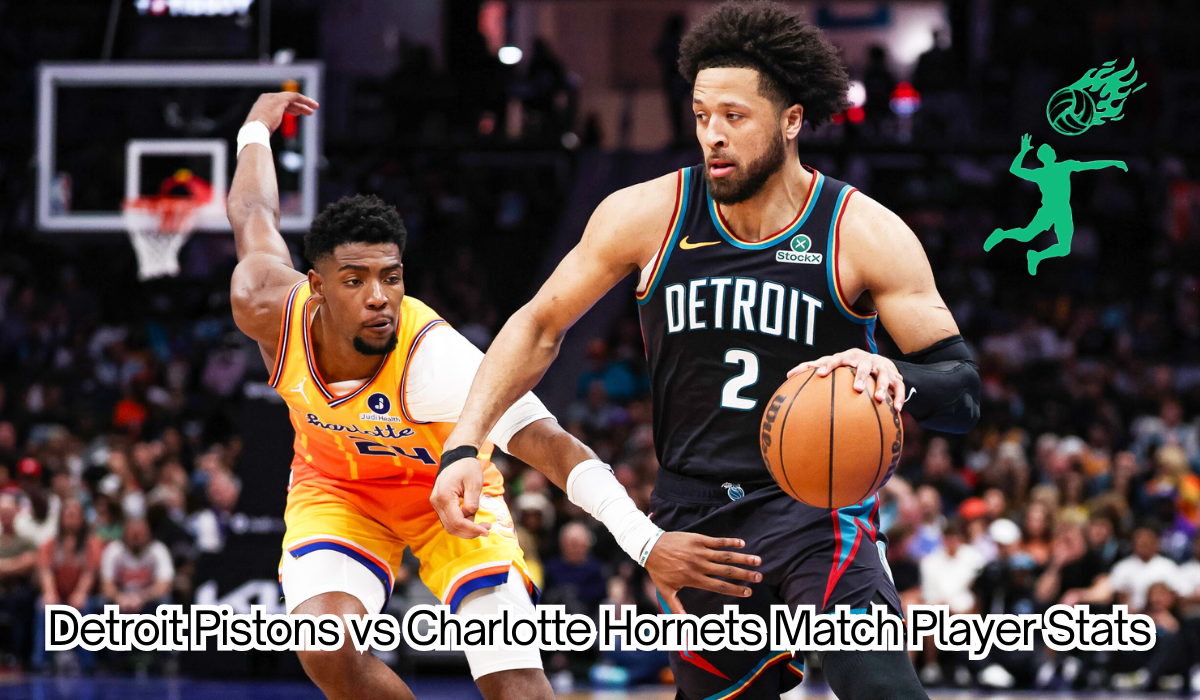
The Detroit Pistons vs Charlotte Hornets match player stats often tell a fascinating story about two young teams working to establish themselves in the Eastern Conference. Whenever these franchises meet, the game usually features rising stars, exciting scoring runs, and valuable insights into each team’s strengths and weaknesses.
For basketball fans, player statistics provide much more than simple numbers. They reveal who controlled the pace, which players stepped up in crucial moments, and how coaching strategies influenced the final outcome. Looking closely at the Detroit Pistons vs Charlotte Hornets match player stats allows fans to understand the game beyond the scoreboard.
Both teams have focused heavily on developing young talent in recent seasons. Detroit has invested in building around dynamic guards and versatile forwards, while Charlotte continues to rely on athletic playmakers and emerging contributors. As a result, every matchup becomes an opportunity to evaluate player growth and team chemistry.
Why Player Stats Matter in Pistons vs Hornets Games
Statistics are the foundation of modern basketball analysis. While highlights showcase spectacular dunks and clutch shots, player stats reveal the consistency and efficiency behind those moments.
When examining a Pistons-Hornets matchup, several statistical categories stand out:
- Points scored
- Field goal percentage
- Three-point shooting accuracy
- Rebounds
- Assists
- Steals
- Blocks
- Turnovers
- Plus-minus ratings
These metrics help determine which players had the greatest impact on the game and how each team executed its game plan.
For example, a player may score 25 points, but if they require 30 shots to get there, the efficiency may be questionable. Conversely, a player who records 18 points on 10 shots while contributing rebounds and assists might have delivered the more valuable performance.
Detroit Pistons Key Player Performances
The Pistons have developed a roster filled with promising young talent capable of producing impressive stat lines against any opponent.
Cade Cunningham’s Impact
Whenever fans review Detroit Pistons vs Charlotte Hornets match player stats, Cade Cunningham is usually one of the first names they examine.
As Detroit’s primary playmaker, Cunningham often contributes across multiple statistical categories:
Typical stat line:
- 22–30 points
- 6–10 assists
- 5–8 rebounds
- Strong shooting percentages
His ability to orchestrate the offense makes him the centerpiece of Detroit’s attack. Against Charlotte, Cunningham often finds opportunities to exploit defensive mismatches through pick-and-roll situations and mid-range scoring.
Beyond scoring, his court vision creates open looks for teammates, making assists a crucial part of his overall value.
Jaden Ivey’s Offensive Explosion
Jaden Ivey brings speed and athleticism that can significantly influence the outcome of games.
His contributions frequently include:
- Fast-break points
- Rim attacks
- Three-point shooting
- Defensive pressure
In many Pistons-Hornets matchups, Ivey’s ability to push the pace forces Charlotte’s defense into uncomfortable situations. His transition scoring often generates momentum-changing runs.
When Ivey records efficient shooting numbers alongside solid assist totals, Detroit’s offense becomes much harder to defend.
Jalen Duren’s Presence in the Paint
The battle for rebounds is often a major factor in determining the winner between Detroit and Charlotte.
Jalen Duren typically contributes:
Key interior statistics:
- Double-digit rebounds
- High field-goal percentage
- Multiple offensive boards
- Blocks and rim protection
His physicality helps Detroit control second-chance opportunities. If Duren dominates the glass, the Pistons gain a significant advantage in possession count.
Supporting Cast Contributions
Successful Detroit performances rarely depend on one player alone.
Additional contributors often include:
- Tobias Harris
- Isaiah Stewart
- Ausar Thompson
- Bench scorers and role players
These players may not always lead the scoring charts, but their contributions in rebounding, defense, and spacing frequently appear in important sections of the stat sheet.
Charlotte Hornets Key Player Performances
The Hornets rely on a blend of creativity, speed, and perimeter shooting. Their top performers frequently generate impressive statistical outputs against Detroit.
LaMelo Ball’s All-Around Production
LaMelo Ball remains one of the league’s most entertaining players and a major focus when analyzing Detroit Pistons vs Charlotte Hornets match player stats.
His typical contributions include:
- High scoring totals
- Double-digit assists
- Rebounding from the guard position
- Steals
- Three-point shooting
Ball’s ability to create offense for himself and teammates makes him a constant threat. His passing often produces easy baskets that may not show up directly in his scoring numbers but significantly influence the game’s flow.
When Ball records a double-double or triple-double, Charlotte’s chances of winning increase dramatically.
Brandon Miller’s Scoring Ability
Brandon Miller has quickly emerged as one of Charlotte’s most promising young stars.
His strengths include:
Offensive contributions:
- Perimeter shooting
- Mid-range scoring
- Transition offense
- Defensive versatility
Miller’s scoring efficiency is frequently one of the most important statistics in Charlotte’s performances against Detroit. If he shoots effectively from beyond the arc, he stretches the defense and opens driving lanes for teammates.
Miles Bridges’ Athletic Impact
Miles Bridges often fills multiple roles within Charlotte’s system.
His statistical contributions commonly feature:
- 18–25 points
- Strong rebounding numbers
- Fast-break scoring
- Defensive activity
Bridges’ versatility allows Charlotte to adjust its lineup combinations without sacrificing productivity.
Interior Support and Bench Production
The Hornets depend heavily on contributions beyond their primary stars.
Key categories often include:
- Bench scoring
- Rim protection
- Defensive rebounds
- Assist distribution
Strong performances from supporting players frequently determine whether Charlotte can maintain momentum throughout all four quarters.
Comparing Team Shooting Statistics
One of the most revealing aspects of any Detroit Pistons vs Charlotte Hornets match player stats analysis involves shooting efficiency.
Field Goal Percentage
Field goal percentage often serves as a direct indicator of offensive execution.
Teams that generate quality shots generally achieve:
- Better offensive flow
- More consistent scoring
- Reduced reliance on isolation plays
When Detroit wins the field-goal battle, it usually reflects strong interior scoring and effective ball movement.
When Charlotte leads this category, it often indicates successful perimeter shooting and transition offense.
Three-Point Shooting Battle
Modern NBA games are frequently decided beyond the arc.
Critical three-point statistics include:
- Attempts
- Makes
- Percentage
- Corner-three efficiency
A team hitting 40% from three-point range often gains a significant advantage regardless of other statistical categories.
The Hornets typically rely more heavily on perimeter production, while Detroit often balances inside and outside scoring opportunities.
Free Throw Efficiency
Free throws may seem less exciting than dunks and deep threes, but they often determine close contests.
Important free-throw metrics include:
- Attempts
- Conversion rate
- Fourth-quarter performance
Aggressive teams that attack the basket generally earn more trips to the line and create valuable scoring opportunities.
Rebounding: The Hidden Battle
Rebounding remains one of basketball’s most important yet sometimes overlooked statistical categories.
Offensive Rebounds
Offensive boards create second-chance points and extend possessions.
Detroit frequently emphasizes:
- Physical interior play
- Crash-the-glass mentality
- Putback opportunities
Players like Jalen Duren often have a major impact in this area.
Defensive Rebounds
Securing defensive rebounds prevents opponents from earning additional scoring opportunities.
Charlotte’s ability to finish possessions often determines whether it can maintain control against Detroit’s frontcourt.
Winning the rebounding battle frequently correlates with winning the game itself.
Assist Numbers and Ball Movement
Assist totals offer valuable insight into offensive chemistry.
Detroit’s Passing Approach
The Pistons perform best when:
- The ball moves quickly
- Multiple players record assists
- Cunningham creates opportunities
- Turnovers remain low
High assist totals generally indicate efficient offensive execution.
Charlotte’s Playmaking Style
Charlotte often relies on:
- Fast-paced ball movement
- Transition opportunities
- Creative passing from LaMelo Ball
When the Hornets generate 25 or more assists, their offense becomes particularly difficult to contain.
Defensive Statistics That Influence Results
Defense does not always receive the same attention as scoring, but defensive statistics often reveal why games are won or lost.
Steals
Steals create immediate transition opportunities.
Players who frequently impact this category include:
- LaMelo Ball
- Ausar Thompson
- Jaden Ivey
A high steal count often leads directly to easy fast-break points.
Blocks
Shot-blocking changes offensive behavior.
Key benefits include:
- Rim protection
- Defensive intimidation
- Transition opportunities
Detroit and Charlotte both rely on athletic interior defenders to challenge shots around the basket.
Defensive Rating Indicators
Although traditional box scores focus on basic statistics, advanced metrics provide additional insight.
Important defensive indicators include:
- Opponent shooting percentage
- Points allowed
- Defensive efficiency
- Defensive rebounding rate
These figures help explain how teams controlled the game beyond simple scoring totals.
Turnovers and Their Impact
Turnovers remain one of the most influential categories in any matchup.
Detroit’s Ball Security
The Pistons achieve greater success when they:
- Limit careless passes
- Avoid offensive fouls
- Reduce live-ball turnovers
Each turnover represents a lost scoring opportunity and potentially an easy basket for the opponent.
Charlotte’s Transition Opportunities
Charlotte excels when opponents make mistakes.
The Hornets often convert turnovers into:
- Fast-break points
- Open three-pointers
- Momentum-shifting runs
A significant turnover differential can completely alter the game’s outcome.
Advanced Metrics Worth Watching
Modern basketball analysis extends beyond traditional box-score numbers.
Player Efficiency Rating
This metric combines multiple statistical categories into a single value.
Factors considered include:
- Scoring
- Rebounding
- Assists
- Steals
- Blocks
- Shooting efficiency
Higher ratings generally indicate stronger overall performances.
True Shooting Percentage
True Shooting Percentage accounts for:
- Field goals
- Three-pointers
- Free throws
It provides a more complete picture of scoring efficiency than standard field-goal percentage.
Usage Rate
Usage rate measures how often a player finishes possessions through:
- Shots
- Free throws
- Turnovers
Stars like Cade Cunningham and LaMelo Ball typically maintain high usage rates due to their central roles in their respective offenses.
Notable Trends in Recent Matchups
Several recurring themes often emerge when reviewing Detroit Pistons vs Charlotte Hornets match player stats.
Young Stars Leading the Way
Both franchises continue to rely heavily on developing talent.
Common statistical trends include:
- High scoring from young guards
- Improved playmaking numbers
- Increased defensive activity
- Expanding offensive responsibilities
These matchups often serve as measuring sticks for future franchise cornerstones.
Fast-Paced Play
Games between these teams frequently feature:
- High possession counts
- Transition opportunities
- Athletic finishes
- Significant scoring runs
The result is often an entertaining contest with impressive individual statistics.
Competitive Fourth Quarters
Many Pistons-Hornets games remain close entering the final period.
Important clutch-time statistics include:
- Fourth-quarter points
- Late-game shooting percentages
- Turnovers under pressure
- Free-throw performance
Players who excel in these moments often become the difference-makers.
What the Numbers Reveal About Each Team
Looking at the broader picture, the Detroit Pistons vs Charlotte Hornets match player stats reveal contrasting approaches to success.
Detroit typically thrives when:
- Cunningham controls the offense
- Duren dominates the boards
- Turnovers stay low
- Multiple players score efficiently
Charlotte generally succeeds when:
- Ball creates scoring opportunities
- Perimeter shooters connect consistently
- Transition offense flourishes
- Defensive pressure generates turnovers
These statistical patterns help explain why certain matchups favor one team over the other.
Final Thoughts on Detroit Pistons vs Charlotte Hornets Match Player Stats
The Detroit Pistons vs Charlotte Hornets match player stats provide a detailed look at two franchises built around youthful energy, athleticism, and long-term potential. Every meeting offers fans an opportunity to watch emerging stars compete while generating impressive statistical performances.
Whether it’s Cade Cunningham orchestrating Detroit’s offense, Jalen Duren controlling the paint, LaMelo Ball producing highlight-worthy assists, or Brandon Miller showcasing his scoring ability, the numbers consistently reveal the players who shape the game’s outcome.
Beyond points scored, the most meaningful statistics often include rebounds, assists, defensive plays, shooting efficiency, and turnover management. These categories explain how momentum shifts, why certain lineups succeed, and which players deliver the greatest impact when the game is on the line.
FOR MORE VISIT: akcvolleyballcamps
